
Places
Underground Oil Mills
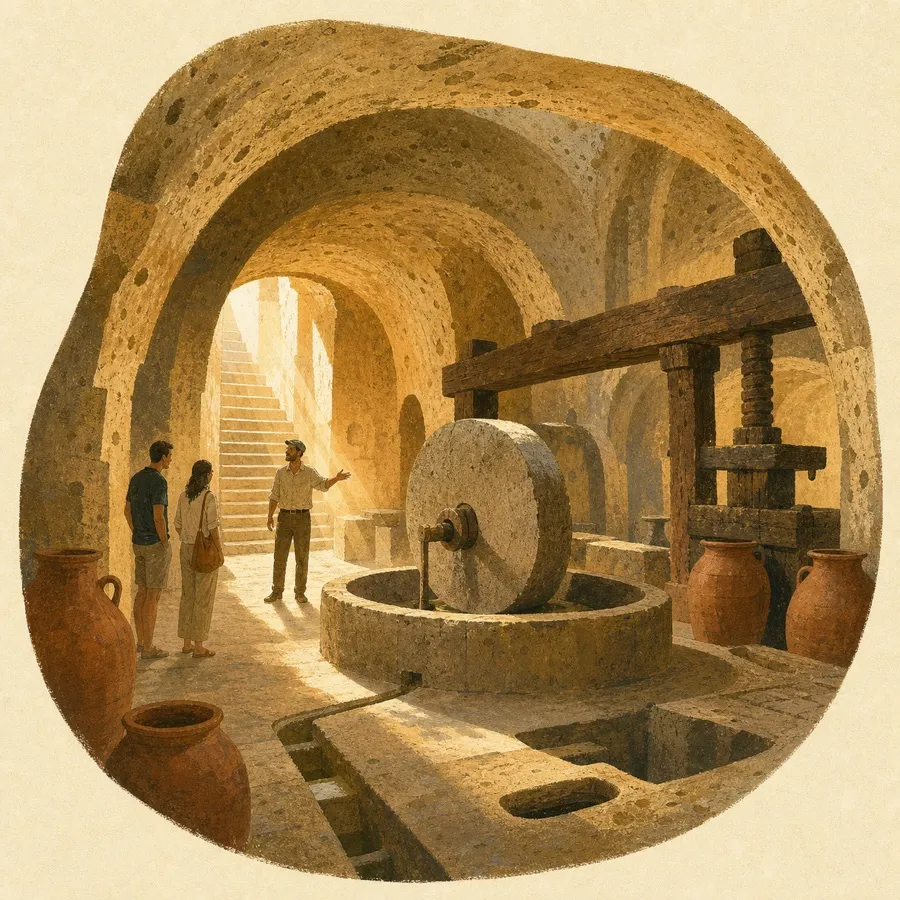
Presicce's underground oil mills are not a single chamber but a distributed production landscape cut into the soft calcarenite beneath the historic centre. The earliest rock-cut spaces in the wider area may have medieval origins, while the network expanded and changed over many centuries. By 1816 local records counted 23 mills, eight of them concentrated beneath the broad area of Piazza del Popolo. Their scale justifies the image of a second town below the visible one.
A steep stair usually descended to a central workroom. Here a mule or donkey turned the millstones that crushed olives into paste; presses then squeezed the paste in stacked fibre filters, and settling containers separated the oil from water and residue. Smaller rooms stored olives and oil or sheltered the animals and the work crews. From autumn into early spring, these crews could remain underground for long shifts while the harvest was processed.
Much of the output was lamp oil rather than the table oil expected by modern visitors. It travelled through the port of Gallipoli and helped light major European cities during the eighteenth and nineteenth centuries. New machinery, changing markets and the poor hygienic conditions of underground production led to abandonment between the nineteenth and early twentieth centuries. Restored mills such as the Mezzapesa, Montanaro and Santoro sites now make this demanding cycle of labour legible again.
Location